
Research in a University Setting with Dr. Ramirez
This is the first lecture in a research lecture series (initially provided as a symposium by the University of Louisville Division of Infectious Diseases). Dr. Julio Ramirez covers important principles regarding conducting research in a university setting from the initial clinical question to publication and establishing a database for continuing research.

- Watch the Video on YouTube
- Watch a CME Accredited Lecture
- Watch more videos in the Research Series
Julio Ramirez, M.D., F.A.C.P.
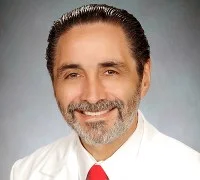
Dr. Ramirez is a Professor of Medicine at the University of Louisville and is the Division Chief for Infectious Disease. His research interests are infection control and the Community Acquired Pneumonia Organization.

Dr. Nancy Kubiak presents an Introduction to Writing Case Reports by first identifying a clinical case appropriate for presentation. She then discusses learning objectives that emphasize the main teaching points of the case. After, she recognizes a "backwards approach" to writing case reports.
Dr. Julio Ramirez presents Clinical Research: From Idea to Publication, by first outlining his discussion on clinical research as definitions and study designs, planning and performing the study, analyzing study results, disseminating study findings, and finally, clinical research infrastructure.
Dr. Tao Le presents "Accelerating Innovation in Academic Medicine" with the help three panelists: Dr. In Kim, Dr. Gerard Rabalais, and Dr. Brad Sutton. Dr. Le discusses various topics like design thinking, team based learning, and the innovation code.
Dr. Nathan Spell discusses Healthcare Quality and Safety by first explaining his perspective as CQO on Emory's improvement journey as well as his perspective as a medical educator on learning improvement (QI) skills. After, he gives multiple examples of QI work to illustrate the learning objectives.
In this Presentation Dr. Boris D. Lushniak discusses the core public health functions: assessment and monitoring of the health of communities and populations at risk, the formulation of public policies, and to assure that all populations have access to appropriate and cost-effective care. Keeping these functions relavent throughout his talk, Dr. Lushniak discusses various skin cancers and conditions. He then concludes his presentation explaining how dermatology fits into the public health model.
In the Eleventh lecture of our Research Series, Stephen Furmanek discusses Quality Improvement projects. This video examines different methods for displaying the results and how to determine which method is best.
In the Tenth lecture of our Research Series, Annuradha Persaud discusses various aspects of Diagnostic Tests. More specifically, this video will discuss how to calculate the measures of diagnostic accuracy, how to utilize the calculations clinically, and how to interpret RUC curves and AUC curves.
In the Ninth lecture of our Research Series, Dr. Brian Guinn discusses different ways to interpret Categorical Data. This lecture specifically looks at risk ratios, odds ratios, and Chi squared.
In the Eighth lecture of our Research Series, Dr. Stephen Furmanek discusses the difference between clinical thinking and statistical thinking. Topics also covered are p-values, effect sizes, and confidence intervals.
Some items in this lecture may have come from the lecturer’s personal academic files or have been cited in-line or at the end of the lecture. For more information, see our citation page.
Disclaimers
©2015 LouisvilleLectures.org
Dr. Olgres presents a quick overview on “Biostats for Internal Medicine”. In this lecture, Dr. Olges explains how to calculate sensitivity and specificity, as well as how to accurately interpret sensitivity and specificity in regards to test results. She then calculates the likelihood ratios and uses them to determine post test probabilities. After, she discusses the difference between relative and absolute risk.